When a Cardiac Drug Becomes a Lung Treatment: Tadalafil's Expanding Role in Respiratory Medicine
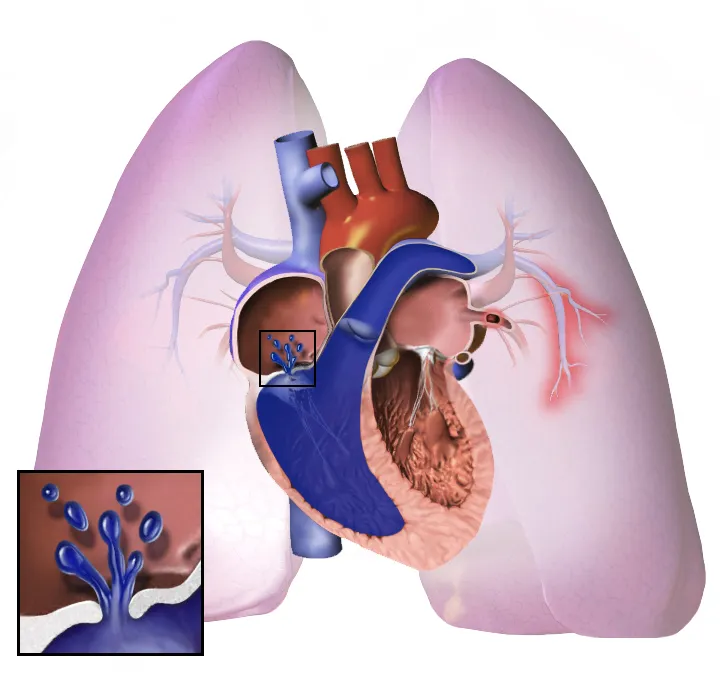
Photo: BruceBlaus, CC BY-SA 4.0, via Wikimedia Commons
Pharmacology rarely moves in straight lines. Drugs developed for one purpose frequently reveal unexpected therapeutic utility — aspirin began as a pain reliever before becoming a cornerstone of cardiovascular prevention, and metformin, originally prescribed for type 2 diabetes, is now being studied as a potential longevity compound. Tadalafil follows a similar trajectory. Widely recognized for its role in treating erectile dysfunction, this PDE5 inhibitor has earned a significant second life as a treatment for pulmonary arterial hypertension (PAH), with emerging research pointing toward additional applications in respiratory medicine that most Americans have never heard of.
Understanding why requires a brief look at how the drug actually works — and why its mechanism of action makes it relevant far beyond men's sexual health.
The Pharmacology Behind the Versatility
Tadalafil belongs to a class of compounds known as phosphodiesterase type 5 (PDE5) inhibitors. These drugs work by blocking an enzyme that breaks down cyclic guanosine monophosphate (cGMP), a signaling molecule that promotes smooth muscle relaxation and vasodilation — the widening of blood vessels. In the context of erectile dysfunction, this mechanism increases blood flow to penile tissue. But PDE5 is not confined to one region of the body. It is expressed in smooth muscle throughout the vascular system, including, critically, in the pulmonary vasculature — the network of blood vessels running through the lungs.
This biological reality is what opened the door to tadalafil's use in treating conditions where pulmonary vascular resistance is pathologically elevated.
Pulmonary Arterial Hypertension: A Serious and Underrecognized Condition
Pulmonary arterial hypertension is a progressive, life-threatening condition characterized by abnormally high blood pressure in the arteries supplying the lungs. Unlike systemic hypertension — the "high blood pressure" most Americans are familiar with — PAH affects only the pulmonary circuit. The right side of the heart must work increasingly hard to pump blood through narrowed, stiffened pulmonary arteries, eventually leading to right heart failure if left untreated.
PAH affects an estimated 200,000 Americans, with a disproportionate incidence among women of childbearing age, though it can affect individuals of any age or gender. Symptoms — which include progressive shortness of breath, fatigue, chest pain, and fainting — are often misattributed to more common conditions, leading to diagnostic delays that can span years.
The condition has historically been difficult to treat, and prognosis without intervention is poor. The development of targeted vasodilatory therapies over the past two decades has significantly changed outcomes for many patients.
FDA Approval and Clinical Evidence
The U.S. Food and Drug Administration approved tadalafil — marketed under the brand name Adcirca specifically for this indication — for the treatment of pulmonary arterial hypertension in 2009. The approval was based on the results of the PHIRST trial (Pulmonary Arterial Hypertension and Response to Tadalafil), a large randomized, placebo-controlled study that demonstrated statistically significant improvements in exercise capacity, as measured by the six-minute walk distance test, among patients receiving tadalafil at 40 mg daily.
Subsequent research has reinforced these findings. Studies published in peer-reviewed journals including the American Journal of Respiratory and Critical Care Medicine have shown that tadalafil reduces pulmonary vascular resistance, delays clinical worsening, and improves quality of life measures in PAH patients. Combination therapy — pairing tadalafil with endothelin receptor antagonists such as ambrisentan — has demonstrated additive benefits in some patient populations, and is now reflected in clinical practice guidelines issued by the American College of Chest Physicians.
Beyond PAH: Emerging Applications in Respiratory Medicine
The clinical interest in PDE5 inhibitors for lung disease extends beyond established PAH indications. Researchers are actively investigating tadalafil's potential utility in several adjacent conditions:
Chronic Thromboembolic Pulmonary Hypertension (CTEPH): A form of pulmonary hypertension caused by unresolved blood clots in the pulmonary arteries, CTEPH affects patients who survive pulmonary embolism. While surgical intervention remains the primary treatment, PDE5 inhibitors are being studied as adjunctive or bridging therapies for patients who are not surgical candidates.
High-Altitude Pulmonary Edema (HAPE): This life-threatening condition, which affects individuals ascending rapidly to high altitudes, involves fluid accumulation in the lungs driven in part by hypoxic pulmonary vasoconstriction. Small studies and case series have suggested that PDE5 inhibitors may attenuate this response, though the evidence base remains preliminary.
Sarcoidosis-Associated Pulmonary Hypertension: Sarcoidosis, a systemic inflammatory disease that frequently affects the lungs, can cause secondary pulmonary hypertension in a subset of patients. Pilot studies have explored tadalafil in this context, with mixed but cautiously encouraging results.
COVID-19 and Post-COVID Pulmonary Complications: The pandemic generated significant scientific interest in PDE5 inhibitors as potential treatments for COVID-19-related pulmonary vascular dysfunction. While definitive evidence from large trials remains limited, the physiological rationale — reducing pulmonary vascular resistance in a disease known to damage endothelial cells — attracted substantial research attention.
Access, Cost, and the Policy Dimension
For patients with PAH, access to tadalafil is a healthcare policy issue as much as a clinical one. Branded formulations prescribed for pulmonary hypertension can carry significant list prices, and insurance coverage — while generally available for FDA-approved indications — can involve prior authorization requirements that delay treatment initiation for vulnerable patients.
The availability of generic tadalafil has introduced important cost dynamics into this space. While the 40 mg dosing used for PAH differs from the lower doses commonly prescribed for ED, the underlying molecule is identical, and generic formulations have made the drug substantially more accessible in the ED context. Advocates for PAH patients have argued that similar pricing transparency and generic availability should extend to pulmonary indications, where the stakes — measured in survival rather than quality of life alone — are arguably even higher.
For patients navigating these complexities, reputable online pharmacy platforms that offer prescription services can provide a streamlined pathway to accessing medications that might otherwise involve lengthy delays in a traditional brick-and-mortar system.
A Molecule Still Being Understood
What the expanding clinical profile of tadalafil illustrates, perhaps most clearly, is that the division between "lifestyle drugs" and "serious medications" is often more a matter of marketing history than pharmacological reality. A compound initially associated primarily with men's sexual health is now a standard-of-care treatment for a potentially fatal lung disease, and may yet demonstrate utility in additional conditions as research matures.
For clinicians, patients, and policymakers alike, this trajectory carries an important lesson: the full therapeutic value of any medication is rarely apparent at the moment of its initial approval. Continued investment in clinical research, combined with equitable access policies, ensures that discoveries made in one domain of medicine can benefit patients across an unexpectedly wide spectrum of need.