When Your Brain Becomes the Barrier: Understanding Performance Anxiety's Role in Erectile Dysfunction
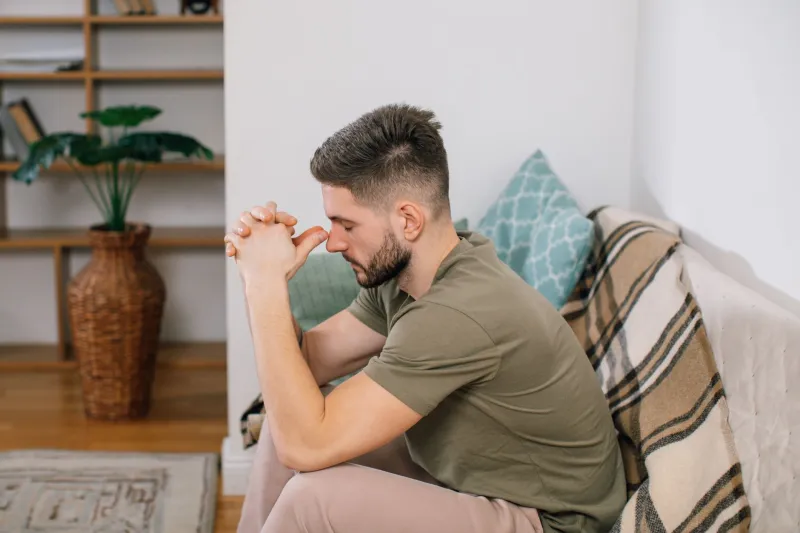
For the millions of American men who experience erectile dysfunction, the first instinct is often to look for a physical explanation. Blood flow, hormone levels, cardiovascular health — these are the usual suspects. Yet a significant portion of ED cases, particularly among younger men, trace their origins not to the body but to the mind. More precisely, they stem from a relentless, self-defeating psychological pattern known as performance anxiety.
Understanding this mechanism — and learning how to interrupt it — can be as important as any prescription. In many cases, it is the missing piece that allows medical treatment to work as intended.
The Feedback Loop No One Talks About
Performance anxiety in the context of sexual health operates through a deceptively simple but powerful mechanism. A man experiences one episode of difficulty achieving or maintaining an erection — perhaps due to fatigue, alcohol, stress, or simple circumstance. Rather than attributing it to a transient cause, he begins to anticipate failure the next time. That anticipation triggers the body's stress response: cortisol and adrenaline flood the system, the sympathetic nervous system activates, and blood is redirected away from non-essential functions — including erection.
The result is exactly what he feared. And with each subsequent episode, the expectation of failure becomes more entrenched, the anxiety more acute, and the physiological interference more reliable. What began as a one-time event has become a self-fulfilling prophecy.
Clinicians sometimes describe this as "spectatoring" — a term coined by pioneering sex researchers William Masters and Virginia Johnson. Rather than being present in the moment, the man mentally steps outside himself, observing and evaluating his own performance in real time. This detachment from sensory experience is profoundly counterproductive. Erection depends on a relaxed, receptive state of arousal; anxious self-surveillance is its direct antagonist.
Why Medication Alone May Not Be Sufficient
This is not to suggest that pharmacological treatment has no role. FDA-approved PDE5 inhibitors, including tadalafil, have a well-established efficacy record and remain a cornerstone of ED management. For men whose anxiety is rooted in uncertainty about whether they will respond physically, the reliable support these medications provide can itself break the cycle — restoring confidence and reducing anticipatory dread.
However, for men whose anxiety is deeply entrenched, medication addresses only half the equation. If the psychological pattern persists, the man may find himself anxious even when taking medication, worried that it will not work, or that his anxiety will override its effects. In these cases, combining pharmaceutical treatment with targeted psychological strategies tends to produce substantially better outcomes than either approach in isolation.
Cognitive Behavioral Approaches: Restructuring the Narrative
Cognitive Behavioral Therapy, or CBT, is among the most rigorously studied interventions for performance anxiety related to sexual dysfunction. At its core, CBT challenges the distorted thinking patterns that sustain the anxiety loop.
A therapist trained in sexual health CBT will help a man identify specific automatic thoughts — "I'm going to fail again," "My partner will be disappointed," "This means something is fundamentally wrong with me" — and examine them critically. Are these thoughts accurate? Are they proportionate? What evidence actually supports or contradicts them?
Through structured exercises, men learn to replace catastrophic interpretations with more measured, realistic assessments. This cognitive restructuring does not eliminate all anxiety overnight, but it gradually weakens the automatic link between sexual situations and threat responses. Research published in peer-reviewed journals has consistently found that CBT improves both erectile function and overall sexual satisfaction, with benefits that tend to persist over time.
For men in the United States, access to CBT-trained sex therapists has expanded considerably through telehealth platforms, making it easier than ever to pursue this form of support without the logistical barriers of in-person appointments.
Mindfulness as a Clinical Tool
Mindfulness-based interventions have gained considerable traction in sexual medicine over the past decade, and the evidence supporting their use is growing. Mindfulness, in this context, means cultivating non-judgmental, present-moment awareness — the direct antidote to spectatoring.
Practices such as mindful breathing, body scan meditation, and sensate focus exercises (a technique originally developed by Masters and Johnson that involves structured, non-goal-oriented physical intimacy) help men reconnect with physical sensation rather than retreating into anxious evaluation. Over time, these practices can recalibrate the nervous system's default response to sexual situations, shifting it from threat-detection toward relaxed engagement.
A 2021 review in the Journal of Sexual Medicine noted that mindfulness-based programs demonstrated measurable improvements in erectile function and reductions in sexual anxiety across multiple study populations. While this area of research is still maturing, the preliminary findings are sufficiently encouraging that many urologists and primary care physicians now recommend mindfulness practices as a complement to standard treatment.
The Role of Open Communication
One factor that significantly amplifies performance anxiety is the silence surrounding it. Many men do not disclose their anxiety to their partners, fearing judgment or loss of attraction. This silence creates additional pressure: the man feels he must perform without revealing his struggle, which only compounds the psychological burden.
Open, honest communication with a partner — even a brief, low-stakes conversation acknowledging that anxiety is a factor — can dramatically reduce that burden. Partners who understand what is happening are generally far more supportive than the anxious mind predicts. Reducing the perceived stakes of any given encounter is itself a therapeutic intervention.
Couple-based therapy, available through many telehealth platforms in addition to traditional clinical settings, can facilitate these conversations in a structured, supportive environment.
Building a Comprehensive Plan
For men navigating this challenge, the most effective path forward typically involves multiple converging strategies. A physician or licensed telehealth provider can assess whether a PDE5 inhibitor is appropriate and, if so, identify the right formulation and dosage. A therapist with expertise in sexual health can introduce CBT or mindfulness-based techniques. And a candid conversation with a partner can reduce the interpersonal pressure that feeds the cycle.
At TadacipRx, we recognize that responsible healthcare means addressing the full picture — not simply dispensing medication and considering the matter resolved. Erectile dysfunction, particularly when anxiety is a driving factor, responds best to integrated care that honors both the physiological and psychological dimensions of men's health.
The mind and body are not separate systems operating in parallel. They are deeply, continuously interconnected. When the mind is caught in a loop of fear and self-judgment, the body follows. And when the mind is given the tools to interrupt that loop, the body frequently follows there as well.
If performance anxiety is a factor in your experience of ED, know that you are far from alone — and that effective, evidence-based support is available. Speaking with a qualified healthcare provider is the first step toward breaking the cycle and reclaiming confidence.